Striped Marlin
Kajikia audax
- Weight
- 80–180 lbs
- Season
- Nov–Jun (peak Dec–May)
GUIDE · 2026 EDITION
Marlin Capital of the World — From Your Doorstep
There's a reason Cabo San Lucas was nicknamed "Marlin Alley" before it was known for anything else. Long before the resorts, the spring breakers, or the rooftop pools, fishermen were flying in by seaplane in the 1940s to fight billfish that didn't exist anywhere else on this scale.
Today, Cabo hosts the world's richest sport fishing tournament. The Bisbee's Black & Blue paid out over $11.6 million in a single year. Boats leave the marina every morning before sunrise loaded with people hoping to land a marlin big enough to mount, photograph, release, or in a few cases — win a million dollars.
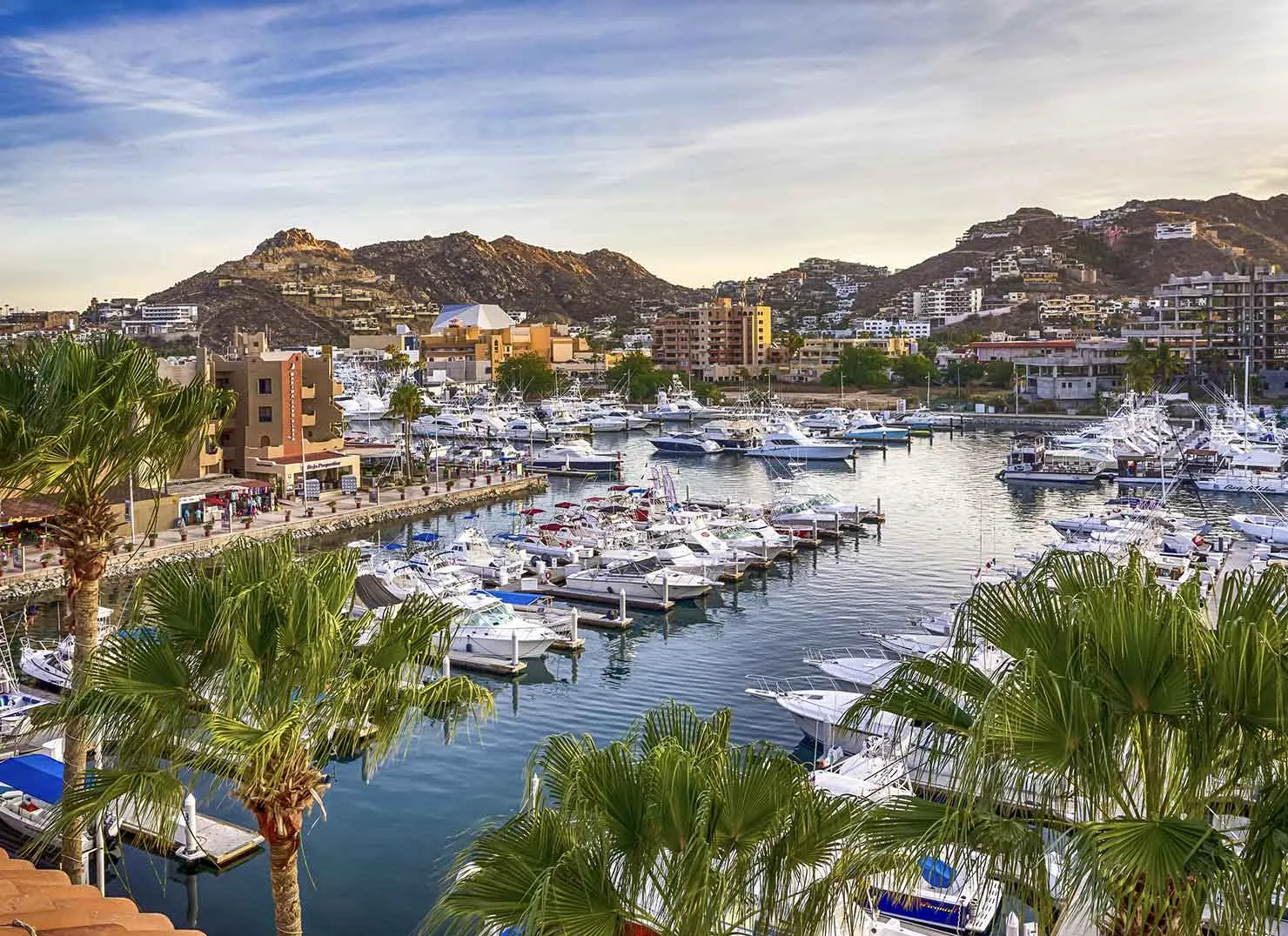
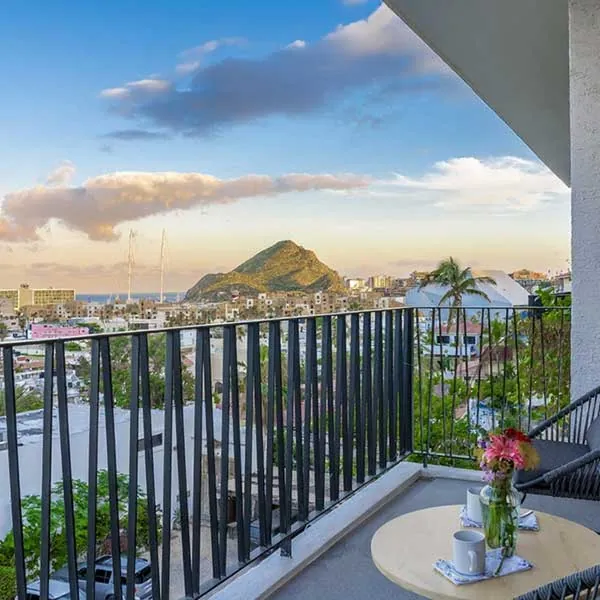
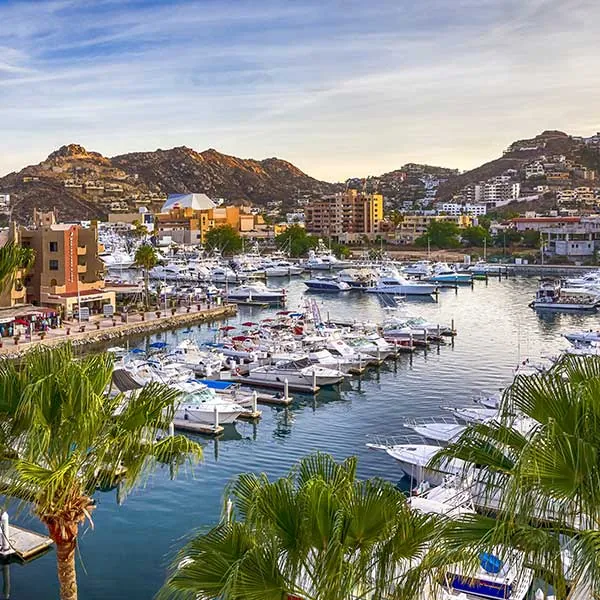
If you're staying at 605 Tower, you're 7-9 minutes walking from the marina where charter boats dock. Most depart between 6:30 and 7:00 AM, which means a 6:00 AM coffee in your suite, a quick walk down Boulevard Lázaro Cárdenas, and you're aboard before the sun is over the hills.
This page covers what you need to know before booking: what species run when, how charters work, realistic prices, what's included, and the unspoken rules locals follow about tipping, photos, and dealing with the dock fee scammers.
If you've never gone deep-sea fishing, Cabo is one of the easiest places in the world to do it for the first time. If you're a serious angler, this is one of the few destinations that can deliver a marlin bigger than your couch on any given day.
BY THE NUMBERS
The fishing here is unusually rich because of geography. The Sea of Cortez meets the Pacific Ocean right at Cabo's tip, and the depth drops off fast — the Pacific seafloor plunges to over 1,000 feet within a few miles of shore. That underwater wall creates upwellings of cold, nutrient-rich water, which feeds plankton, which feeds baitfish, which feeds everything bigger.
The result: three species of marlin (striped, blue, black), big-game tuna, dorado, wahoo, roosterfish, sailfish, and dozens of other species all live in waters reachable within an hour or two from the marina.
American novelist and outdoorsman Zane Grey wrote about fishing Cabo's waters in the 1920s. He called it some of the best big-game fishing in the world. He was right then. A century later, the fishing is still that good.
BISBEE'S BLACK & BLUE
In 1980, a man named Bob Bisbee invited ten friends to a friendly fishing competition with a $10,000 prize pool. Forty-five years later, the tournament he started has paid out over $104 million in prize money and is officially the richest billfish tournament on the planet.
The Bisbee's Black & Blue happens every October at the Cabo San Lucas Marina. The 2022 edition set a record with 223 teams competing for $11.65 million in prizes — first place alone took home over $3.2 million for a single 461-pound blue marlin.
If you're in Cabo during tournament week (typically late October), the whole town turns into a party. Boats roll in at the end of each fishing day to weigh their catch at the Puerto Paraíso scales, drawing crowds of spectators. The minimum qualifying marlin weight is 300 pounds — anything smaller is penalized.
You can't fish in the tournament casually (base entry is $5,000 per team, and serious contenders pay over $80,000 across all jackpot categories). But you can absolutely book a regular charter during tournament week — fishing is excellent, atmosphere is electric.
Three marlin species.
1,000-foot drop-offs.
Five miles from shore.
MONTH BY MONTH
Cabo has fish year-round. But which species, and how aggressively they're biting, changes by month. Here's the honest breakdown:
January-March: Striped Marlin season. Cooler water, calmer mornings. Striped marlin in numbers you won't see anywhere else — captains have released 100+ in a single day at Finger Bank. Dorado slows down. Yellowtail and roosterfish active inshore.
Best for: Striped marlin (peak), yellowtail
April-May: Transition month. Striped marlin still biting but slowing. Yellowfin tuna starts running. Dorado picks up. Spring break crowds on land, but the offshore fishing is excellent.
Best for: Striped marlin tail, dorado, early tuna
June-August: Blue and black marlin season starts. Yellowfin tuna peaks. Dorado at its best. Wahoo starts. Hot, humid, sometimes summer storms — but the biggest fish of the year are out.
Best for: Yellowfin tuna, dorado, blue marlin
September-November: Peak season for blue marlin, black marlin, yellowfin tuna over 100 lbs, dorado, and wahoo all at once. October brings the Bisbee's tournaments. Best month for trophy fish.
Best for: Tuna, blue & black marlin, Bisbee's
December: Winter striped marlin returns. Cooler temperatures. Fewer crowds. Good month for budget-conscious anglers — rates often drop after Thanksgiving.
Best for: Striped marlin returning, calm seas
If you want to catch a billfish on your first try, June through October gives you the best odds. If you want to catch one without fighting crowds, January or December.
SPECIES GUIDE
Kajikia audax
Makaira nigricans
Istiompax indica
Thunnus albacares
Coryphaena hippurus
Nematistius pectoralis
Striped marlin (Tetrapturus audax): The most common marlin in Cabo. 100-200 lbs typically, occasionally larger. Acrobatic fighters that jump and tail-walk. Released, not kept.
Blue marlin (Makaira nigricans): The trophy. 200-1,000+ lbs. The biggest billfish in the Pacific. Peak season June-November.
Black marlin (Istiompax indica): The largest billfish caught in Cabo. Specimens over 1,000 lbs are recorded. Rarer than blue.
Yellowfin tuna (Thunnus albacares): 30-200+ lbs. Peak July-November. Some of the strongest pound-for-pound fighters in the ocean. Excellent sushi-grade meat.
Dorado / Mahi-mahi (Coryphaena hippurus): 15-50 lbs. Brilliant gold-green-blue coloring. Peak June-October. The best eating fish you'll catch.
Roosterfish (Nematistius pectoralis): 10-80 lbs. Inshore species with a dramatic black "rooster comb" dorsal fin. Catch-and-release only in Cabo since 2007.
WHAT IT COSTS
Prices vary by boat size, season, and operator, but here are honest ranges:
22–26 ft · 2–3 anglers
$250–$450 USD
28–32 ft · 4 anglers
$700–$1,100 USD
33–40 ft · 4–6 anglers
$1,200–$1,800 USD
42–60 ft+ · 6–10 anglers
$2,000–$5,500 USD
Panga (25-28 ft, 3-4 anglers, inshore): $250-400 for half-day, $400-600 for full-day
Small cruiser (28-31 ft, 4-5 anglers): $450-650 half-day, $650-900 full-day
Mid-size cruiser (32-37 ft, 5-6 anglers): $650-900 half-day, $900-1,400 full-day
Large sportfisher (38-42+ ft, 6-8 anglers, full amenities): $1,000-1,500 half-day, $1,500-2,500+ full-day
What's usually included: boat, captain and crew, fuel, rods/reels/tackle, ice, bait, fishing licenses for the boat.
What's usually NOT included: drinks and lunch (some operators include, ask), crew tip (15-20% standard), individual Mexican fishing license ($23 USD per angler if required by operator), fish cleaning/packing service.
Booking direct with a captain or smaller operator at the marina is sometimes cheaper than third-party platforms. Booking online through platforms like Viator or FishingBooker is more convenient and usually includes pickup. We can connect you with operators we trust — message our concierge at +52 624 192 2377.
There are two completely different kinds of fishing in Cabo, and most first-timers don't know the difference until they're already booked.
Inshore
Inshore fishing: 4-5 hour trips, smaller boats (pangas or 25-28 ft cruisers), staying within a few miles of the coast. Target species: roosterfish, sierra mackerel, jack crevalle, snapper, grouper, yellowtail. Less expensive ($250-400 per trip), perfect for beginners, families with kids, or anyone prone to seasickness.
Offshore
Offshore (deep sea) fishing: 6-10 hour trips, larger boats (28-42 ft sportcruisers), running 10-50 miles out. Target species: marlin, tuna, dorado, wahoo, sailfish. More expensive ($500-1,500+ per trip), required if you want any chance at a marlin or trophy tuna.
If this is your first time, consider an inshore half-day. If you've fished before and want the iconic Cabo marlin shot, book a full-day offshore charter.
CONSERVATION
Mexican law requires the release of all billfish caught for sport unless they meet specific size minimums (around 800+ lbs for blue/black marlin). Most charter captains and serious sport fishermen practice catch-and-release universally for billfish, even in tournaments where weighed fish would qualify for prizes.
For tuna and dorado, kept fish is normal — and your boat captain will clean and fillet them at the dock. Most marinas have refrigerated storage. Restaurants in Cabo will gladly cook your catch for dinner (call ahead).
Roosterfish are protected by law: catch and release only. No keeping, no selling, no eating.
A 7-9 minute walk from your suite gets you to the Marina entrance at Plaza API. Charter docks are spread along the boardwalk; most are between Dock #2 and Dock #6 area.
If your charter has a 6:30 AM departure (common), set your alarm for 5:45 AM, grab a thermos of coffee from your kitchen, and walk down. At that hour the streets are empty and the marina is just starting to wake up.
Bring cash for tip ($50-100 per angler is normal for a full day trip with good crew)
Bring your own snacks if your boat doesn't include them — some don't
Sunscreen, hat, polarized sunglasses, light jacket for the morning run out
Phone in waterproof case — you will get spray
Avoid the loose dock hawkers offering "deals" — they're middlemen not boat owners, and prices are usually higher
Confirm your boat name and captain the night before via WhatsApp with your operator
PLAN THE TRIP
When the marina is 7 minutes from your front door, the marlin grounds become a morning errand. Stay in downtown Cabo, leave the resort taxi schedule behind.
ON THE WATER
December to April, humpbacks and grays arrive after a 5,000 km migration. Tours depart the same docks.
Read the guideEVERY EVENING
Catamarans and sailboats round El Arco at golden hour. Two hours, open bar, and the bay's best light.
Read the guideLANDMARK
The natural rock arch at Land's End. Pangas, glass-bottom boats, and the sea lion colony beside it.
Read the guideDOORSTEP TO THE DOCKS
7-9 min walk · Charters from $250